Support our educational content for free when you purchase through links on our site. Learn more
Why Do Pop Chord Progressions Sound Familiar? 🎹


Certain chord progressions sound familiar in pop songs because songwriters reuse harmonic patterns our ears have learned to recognize and anticipate. But shared chords don’t automatically make songs sound the same: melody, rhythm, lyrics, and production can transform one familiar progression into something entirely its own.
At Friends Quotes™, we spend plenty of time thinking about why familiar words can still feel personal. Music works similarly. A sequence like I–V–vi–IV may feel like an old friend, while the melody and story make each song a different conversation.
We’ll unpack the music theory behind that recognition, explore 12 common pop chord progressions, and show how musicians make familiar harmony sound fresh. By the end, you’ll have a better ear for the patterns hiding beneath your favorite hooks. 🎶
Key Takeaways
- Familiar chord progressions create musical expectations: repetition and resolution help listeners anticipate what may come next.
- Roman numerals show chord relationships across keys: I–V–vi–IV can be played as C–G–Am–F in C major or transposed to another key.
- The same chords don’t mean the same song: melody, rhythm, lyrics, bass lines, arrangement, and production give songs their character.
- A shared progression alone doesn’t prove copying: musical similarity involves more than chord names, and legal questions depend on specific details.
- Familiar harmony is a creative tool: songwriters can reshape it with new rhythms, chord voicings, borrowed chords, and memorable melodies.
Table of Contents
- ⚡ Quick Tips and Facts: Why Pop Chord Progressions Feel Familiar
- 🎹 The History of Familiar Chord Progressions in Pop Music
- 🧠 Why Certain Chord Progressions Sound So Familiar
- How Musical Patterns Help Your Brain Predict What Comes Next
- The Role of Repetition, Harmony, and Resolution
- 🎼 Music Theory Basics: Chords, Keys, and Roman Numerals
- Major and Minor Keys in Pop Songs
- How Diatonic Chords Create a Cohesive Sound
- What Tonic, Dominant, and Subdominant Chords Do
- 🎸 12 Common Chord Progressions You’ll Recognize in Pop Songs
- 1. I–V–vi–IV: The Classic Four-Chord Pop Progression
- 2. vi–IV–I–V: The Emotional Pop Favorite
- 3. I–vi–IV–V: The 1950s Progression That Never Left
- 4. I–IV–V: The Three-Chord Foundation
- 5. I–V–IV: A Familiar Rock and Pop Turnaround
- 6. ii–V–I: A Jazz-Inspired Resolution
- 7. I–IV–vi–V: A Bright, Singable Sequence
- 8. vi–V–IV–V: A Descending Emotional Pattern
- 9. I–iii–IV–V: A Gentle Lift Toward the Chorus
- 10. I–♭VII–IV: The Mixolydian Pop-Rock Sound
- 11. i–♭VI–♭III–♭VII: The Cinematic Minor-Key Progression
- 12. I–V–vi–iii–IV: A Longer Progression With a Familiar Feel
- 🎤 How Songwriters Make Familiar Chords Feel New
- Melody, Rhythm, Tempo, and Groove
- Chord Inversions, Voicings, and Bass Lines
- Production, Instrumentation, and Arrangement
- Lyrics and Emotional Context
- 🔍 Does Using the Same Chords Mean Songs Sound the Same?
- Chord Progressions Versus Melody and Copyright
- Why Similar Songs Can Still Feel Distinct
- 🎧 How to Identify Chord Progressions by Ear
- A Step-by-Step Listening Method
- Useful Music Apps and Tools for Finding Chords
- ✍️ How to Write a Familiar-Sounding Progression Without Copying
- Change the Rhythm, Key, or Chord Order
- Add Suspensions, Seventh Chords, or Borrowed Chords
- Build a Memorable Melody Over Common Chords
- 🚫 Common Misconceptions About Pop Chord Progressions
- 🎯 Conclusion: Familiar Chords, Fresh Songs
- 🔗 Recommended Links
- ❓ FAQ
- Why do pop songs use the same chord progressions?
- What is the most common chord progression in pop music?
- Why do four chords work for so many songs?
- Can you recognize a song from its chord progression alone?
- Do common chord progressions make songs less original?
- How can I learn to hear chord changes?
- 📚 Reference Links
⚡ Quick Tips and Facts: Why Pop Chord Progressions Feel Familiar
If you’ve ever heard a new pop song and thought, “Wait, haven’t I heard this before?”, you may be recognizing a familiar harmony—not necessarily a copied song. For a handy companion list, see our guide to the most common chord progressions in pop music.
| Quick fact | What it means |
|---|---|
| A small group of chords appears in countless songs. | Many pop writers draw from the same chords in a key, then arrange them in familiar sequences. |
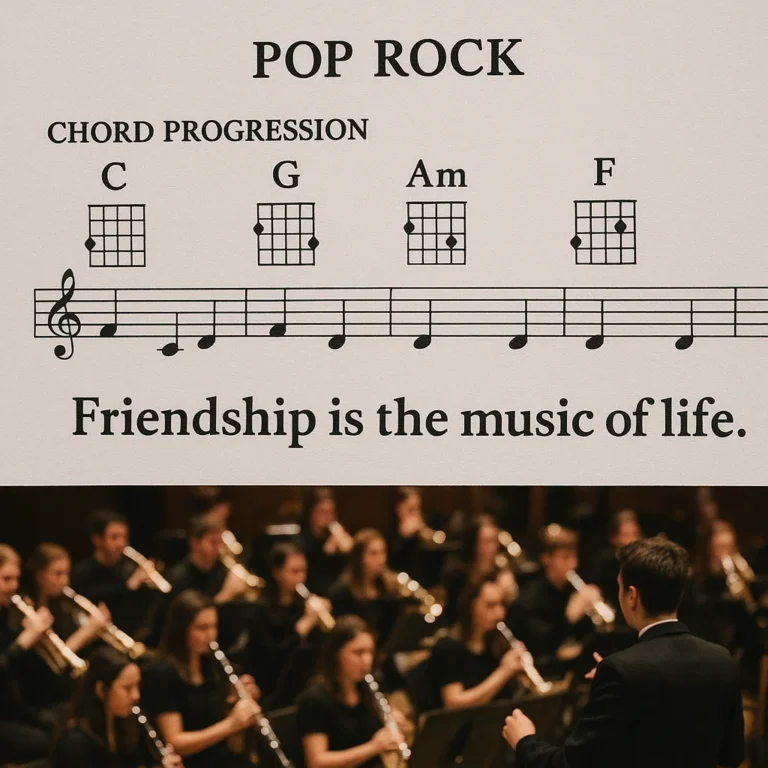
| Roman numerals describe chord function, not a fixed key. | I–V–vi–IV in C major is C–G–Am–F; in G major, it’s G–D–Em–C. |
| The same chords can create different moods. | Starting on the major tonic can feel settled; starting on the relative minor can make the same chord pool feel more wistful. |
| Chords are only part of a song’s identity. | Melody, rhythm, lyrics, tempo, performance, and production all help distinguish songs. |
| Familiarity is not proof of plagiarism. | A shared chord sequence alone rarely tells you whether two songs are substantially alike; melody and other musical details matter too. |
A widely discussed example is I–V–vi–IV, often represented in C major as C–G–Am–F. In a broad overview of pop songwriting, MusicTheoryForGuitar describes a shared four-chord pattern and explains how melody, lyrics, rhythm, and arrangement can make familiar harmony sound distinct. That’s a useful perspective, though no single progression explains all pop music.
One more clue: a progression can be recognizable without being the first thing you consciously hear. Your ear may latch onto the melody or beat while the harmony quietly provides the song’s emotional floorboards. 🪵
🎹 The History of Familiar Chord Progressions in Pop Music

Pop did not invent repeated chord patterns. Western popular music inherited a long tradition of recurring harmonic formulas from folk, gospel, blues, jazz, and classical music. Songwriters pass those patterns along because they are playable, memorable, and easy to adapt.
The familiar four-chord loop became especially prominent in recorded pop because it suits a practical arrangement: a keyboard or guitar can repeat the harmony while a singer carries the changing story. The progression doesn’t have to change every few bars for the song to develop. A new melody, lyric, drum pattern, or production layer can do that work instead.
This is why familiar harmony shows up across genres and eras, from acoustic ballads to guitar-driven rock and polished dance-pop. Still, the claim that “all pop songs use the same chords” is an entertaining exaggeration, not a literal description. Pop includes minor-key sequences, blues-based harmony, modal writing, borrowed chords, and songs built around very little harmonic movement.
A practical listening trick: compare the chord loop with the song’s melodic shape and groove. If the chords seem familiar but the tune feels unmistakable, you’ve found one reason a shared progression doesn’t automatically make two songs sound alike.
🧠 Why Certain Chord Progressions Sound So Familiar
Familiar progressions feel familiar partly because our ears learn musical patterns through exposure. When a sequence follows a common path, listeners can anticipate where it might go. That prediction can make a chorus feel satisfying—even if you couldn’t name a single chord.
How Musical Patterns Help Your Brain Predict What Comes Next
Listening is not just receiving sound; it involves noticing patterns and forming expectations. Research on music cognition explores how listeners build expectations from musical context and how those expectations relate to emotion. A useful starting point is this overview of music and the brain from the National Institutes of Health.
With a familiar progression, your ear begins to recognize its harmonic “grammar.” You may sense that the next chord is likely to resolve, lift, or circle back—even if you don’t consciously predict the exact chord.
That doesn’t mean every listener reacts identically. Musical background, culture, listening history, and personal associations all influence what feels expected. A guitarist who has played the same sequence at a campfire might hear it as comfortably familiar; someone encountering it through a favorite film scene may connect it with that memory instead.
The Role of Repetition, Harmony, and Resolution
Repetition gives a progression time to settle into your memory. Resolution gives the ear a sense of arrival. Put them together, and a repeating chord loop can feel both predictable and emotionally rewarding.
Consider I–V–vi–IV:
- I establishes the home chord.
- V creates movement and expectation.
- vi brings a softer, more reflective color.
- IV opens the sound and helps lead back toward the start.
That description is a listening guide, not a law of emotion. A minor chord isn’t automatically sad, and a major chord isn’t guaranteed to sound happy. Tempo, melody, lyrics, arrangement, and performance can shift the mood dramatically.
🎼 Music Theory Basics: Chords, Keys, and Roman Numerals
You don’t need to read sheet music to understand why chord progressions repeat. A few basic terms help explain how songwriters reuse harmonic patterns while changing the key.
Major and Minor Keys in Pop Songs
A key provides a home base: a group of notes and chords that tend to fit together. Major and minor keys use different relationships between those notes, which can influence a song’s overall color.
| Key | Example notes | Example tonic chord |
|---|---|---|
| C major | C, D, E, F, G, A, B | C major |
| A minor | A, B, C, D, E, F, G | A minor |
C major and A minor share the same natural notes, but they don’t necessarily feel interchangeable. The tonic—the chord that feels most like “home”—changes, as can the melody’s emphasis and the progression’s emotional effect.
How Diatonic Chords Create a Cohesive Sound
Diatonic chords are chords built from the notes of a key. In C major, the basic triads are:
| Roman numeral | Chord in C major | Quality |
|---|---|---|
| I | C | Major |
| ii | Dm | Minor |
| iii | Em | Minor |
| IV | F | Major |
| V | G | Major |
| vi | Am | Minor |
| vii° | Bdim | Diminished |
The exact chord names change when you change keys, but the Roman-numeral relationships stay the same. That’s why musicians can discuss I–V–vi–IV as a reusable pattern instead of naming one fixed set of chords.
What Tonic, Dominant, and Subdominant Chords Do
In simple terms, these functions describe how chords relate to the tonal center:
- Tonic: The home base. In C major, that’s C.
- Dominant: A chord that often creates tension or a pull toward home. In C major, that’s commonly G.
- Subdominant or predominant: A chord that tends to lead away from home or prepare a stronger harmonic movement. In C major, F often serves this role.
These are helpful patterns, not rules that every song must follow. Pop songwriting often plays with them, delays resolution, or avoids a conventional ending altogether.
🎸 12 Common Chord Progressions You’ll Recognize in Pop Songs
Here are 12 useful progressions to know. The Roman numerals show relationships within a key; the example chords use C major or A minor when practical.
| Progression | Example chords | General listening impression |
|---|---|---|
| I–V–vi–IV | C–G–Am–F | Open, familiar, adaptable |
| vi–IV–I–V | Am–F–C–G | More minor-leaning at the start |
| I–vi–IV–V | C–Am–F–G | Classic, singable, resolved |
| I–IV–V | C–F–G | Direct and sturdy |
| I–V–IV | C–G–F | Strong, simple, rock-friendly |
| ii–V–I | Dm–G–C | Purposeful, jazz-influenced resolution |
| I–IV–vi–V | C–F–Am–G | Bright with a softer turn |
| vi–V–IV–V | Am–G–F–G | Descending, dramatic motion |
| I–iii–IV–V | C–Em–F–G | Gradual lift |
| I–♭VII–IV | C–B♭–F | Rock-oriented, modal color |
| i–♭VI–♭III–♭VII | Am–F–C–G | Cinematic minor-key sound |
| I–V–vi–iii–IV | C–G–Am–Em–F | Longer arc with a reflective turn |
1. I–V–vi–IV: The Classic Four-Chord Pop Progression
In C major, this is C–G–Am–F. It moves from home to a strong dominant chord, then visits the relative minor before landing on F. That combination gives songwriters room for both brightness and emotional softness.
You’ll find this progression discussed in songs across pop and rock, but chord identification can depend on the section, key, and arrangement. Treat lists of song examples as listening prompts, not definitive transcriptions: a song may use a variation, capo, alternate tuning, or different progression in the verse and chorus.
Try it: Play one chord per bar, then try changing the rhythm to a steady eighth-note strum. The harmony stays put, but the energy changes immediately.
2. vi–IV–I–V: The Emotional Pop Favorite
In C major, this becomes Am–F–C–G. It uses the same chords as I–V–vi–IV, but starts on A minor. That small rearrangement changes what feels like the emotional starting point.
The loop can sound reflective without being entirely dark. The C and G chords bring lift and forward motion, while Am gives the first impression a minor tint. This is one reason a shared set of chords can support songs with different moods.
3. I–vi–IV–V: The 1950s Progression That Never Left
In C major: C–Am–F–G. This sequence has a clear home chord, a move to the relative minor, and a strong pull from G back toward C. Its tidy shape makes it easy to sing and easy to accompany.
The progression is often associated with earlier popular songwriting traditions, but it isn’t trapped in a decade. Writers can make it sound vintage, modern, gentle, or theatrical by changing the melody, tempo, rhythm, instrumentation, or chord voicings.
4. I–IV–V: The Three-Chord Foundation
C–F–G in C major is a compact example of tonic, subdominant, and dominant harmony. It’s easy to play on guitar or piano, and it leaves plenty of space for a memorable vocal line.
The trade-off is that the progression can sound plain if every other musical element is plain too. A distinctive rhythm, bass line, melody, or lyric can give these three familiar chords a character of their own.
5. I–V–IV: A Familiar Rock and Pop Turnaround
In C major, C–G–F turns the progression around from home to dominant and then to the subdominant. It’s a simple sequence that works well with strong strumming and a direct melodic hook.
The order matters. Even though it contains the same three chords as I–IV–V, placing G before F changes the movement and the way the loop resets. Familiar ingredients; different route.
6. ii–V–I: A Jazz-Inspired Resolution
In C major, Dm–G–C moves through a predominant chord and dominant to the tonic. It is one of the best-known harmonic patterns in jazz, but its clear sense of motion can also turn up in pop and soul-inspired writing.
Try adding seventh chords—Dm7, G7, and Cmaj7—to hear a smoother, richer version. It sounds more colorful than a plain triad sequence, but the basic harmonic journey remains easy to follow.
7. I–IV–vi–V: A Bright, Singable Sequence
This is C–F–Am–G in C major. It begins firmly, opens outward with F, turns toward the minor vi, and then uses G to point back toward C.
Its usefulness comes from that contrast: the first two chords can feel expansive, while Am softens the sequence. A chorus melody can ride over the progression without needing a complicated harmonic change in every bar.
8. vi–V–IV–V: A Descending Emotional Pattern
In C major, this is Am–G–F–G. The bass descends from A to G to F before returning to G, creating a sense of downward movement and renewed tension.
That falling motion can support lyrics about uncertainty, longing, or change, but the effect depends on the performance. A brisk beat and bright instrumentation can make the same sequence feel energetic rather than mournful.
9. I–iii–IV–V: A Gentle Lift Toward the Chorus
C–Em–F–G gives the progression a step-by-step feeling of expansion. The iii chord is minor, but it shares two notes with the tonic triad, making the change feel connected rather than abrupt.
It can work as a verse progression that gradually gathers momentum. Add a rising melody or busier percussion, and the sense of lift becomes even stronger without changing the chord sequence.
10. I–♭VII–IV: The Mixolydian Pop-Rock Sound
In C, this is C–B♭–F. The B-flat chord is outside the ordinary C-major scale, giving the progression a bluesy, rock-oriented color often associated with Mixolydian harmony.
That flat seventh chord is a useful reminder: pop music doesn’t have to stay strictly within one major or minor scale. Borrowed chords and modal colors are part of what keep familiar songwriting tools flexible.
11. i–♭VI–♭III–♭VII: The Cinematic Minor-Key Progression
In A minor, the sequence is Am–F–C–G. These chords can be heard as i–♭VI–♭III–♭VII in A minor, creating a broad, dramatic sound that is common in pop-rock and soundtrack-style writing.
Here is the interesting twist: Am–F–C–G uses the same four chord names as vi–IV–I–V in C major. The labels differ because the tonal center differs. The starting chord, melody, bass emphasis, and resolution help determine which chord feels like home.
12. I–V–vi–iii–IV: A Longer Progression With a Familiar Feel
In C major, C–G–Am–Em–F adds iii between the minor vi and the subdominant IV. The extra chord creates a longer path while keeping the harmony rooted in a familiar major-key sound.
Use this as a reminder that familiarity doesn’t require a four-chord loop. A five-chord sequence can still feel accessible when the chords belong to a recognizable key and the melody gives listeners a clear point of reference.
🎤 How Songwriters Make Familiar Chords Feel New
A chord progression is like a room’s layout: it matters, but it doesn’t tell you who’s in the room, what they’re saying, or whether the lights are warm. Songwriters shape familiar harmony through musical choices that listeners may notice before they notice the chords.
Melody, Rhythm, Tempo, and Groove
A memorable melody can make a common progression feel unmistakably personal. Rhythm matters just as much: syncopation, pauses, a pickup into the chorus, or a long note over a changing chord can reshape the listener’s impression.
Try this simple comparison:
- Play C–G–Am–F with one chord per bar.
- Repeat the chords with short, syncopated piano hits.
- Keep the rhythm but change the tempo.
- Add a melody that begins on a chord tone, then one that begins on a surprising note.
The progression is unchanged, but the character shifts. The first YouTube video, “Why Do ALL Pop Songs Use The Same Chords?” by Matthew Cawood, is a helpful companion for thinking about why pop writers reuse chord patterns and how those patterns can still support different songs.
Chord Inversions, Voicings, and Bass Lines
An inversion changes which chord note sits in the bass. A voicing changes how the chord tones are arranged. Both can make the same chord progression feel smoother, airier, darker, or more forceful.
For example, a pianist can play C–G–Am–F with closely spaced notes in the right hand, or spread each chord across several octaves. A guitarist might use open chords, barre chords, a capo, or picked arpeggios. The chord names may stay the same; the sound does not.
The bass line also guides your ear. If it moves in a stepwise line rather than jumping between roots, the progression may feel more connected—even with identical chords.
Production, Instrumentation, and Arrangement
A progression played on acoustic guitar won’t feel the same as that progression performed by a synth bass, layered drums, and a wide keyboard pad. Production choices affect texture, energy, and emphasis.
| Musical choice | What it can change |
|---|---|
| Acoustic guitar or piano | Intimacy, clarity, a singer-songwriter feel |
| Synths and electronic drums | Size, repetition, club or dance-pop energy |
| Distorted guitar | Weight and intensity |
| Sparse arrangement | Space for lyrics and vocal detail |
| Layered backing vocals | A sense of lift, warmth, or scale |
| Drum entrance or drop | How strongly a chorus lands |
A producer may keep the same harmony for an entire section and build excitement by adding layers. That’s not a shortcut by default; it’s one way of directing attention.
Lyrics and Emotional Context
Words give chords a story. The same progression can sound celebratory under a lyric about reunion and bittersweet under a lyric about leaving. Vocal delivery matters too: a whispered line and a belted chorus carry different emotional weight.
We write about friendship every day at Friends Quotes™, and the same principle applies to words outside music: context changes how a familiar phrase lands. A line about loyalty can feel playful, comforting, or heartbreaking depending on the moment around it. That’s why a song’s emotional identity can’t be reduced to its chord chart.
Explore our collections of friendship quotes, deep friendship quotes, and friendship and love quotes for examples of how a familiar idea gains meaning from its wording and context.
🔍 Does Using the Same Chords Mean Songs Sound the Same?
No. Sharing a chord progression is like sharing a common sentence structure: it can make two works feel related, but it doesn’t make them identical. Thousands of songs use the same basic harmonic patterns while differing in melody, rhythm, lyrics, arrangement, and performance.
Chord Progressions Versus Melody and Copyright
A chord progression alone generally provides limited information about a song’s originality. In the United States, copyright protects original expression fixed in a work; it does not grant ownership over every basic musical building block. For practical context, see the U.S. Copyright Office’s guidance on musical compositions and its copyright basics overview.
That is not legal advice, and disputes depend on the specific facts and jurisdiction. A song’s melody, lyrics, or distinctive musical elements may raise different questions from a shared progression. If you’re writing commercially and have a genuine legal concern, consult a qualified music attorney rather than relying on a chord chart or internet comparison.
Why Similar Songs Can Still Feel Distinct
Two songs can share chord names and still sound different because listeners hear the whole performance, not just the harmony. Compare the following:
| Element | How it gives a song its own identity |
|---|---|
| Melody | Creates recognizable contours, phrases, and hooks |
| Rhythm | Shapes the groove and lyrical delivery |
| Lyrics | Establishes point of view and story |
| Vocal performance | Adds tone, phrasing, and personality |
| Instrumentation | Changes the sound palette |
| Arrangement | Controls entrances, build-ups, drops, and contrast |
| Production | Shapes texture, space, dynamics, and timbre |
A useful counterpoint to the “every hit uses the same chords” claim is that common progressions are only one ingredient in a song. MusicTheoryForGuitar makes that case, emphasizing how melody, lyrics, rhythm, and arrangement differentiate songs that share harmony. The available summary of the Medium article by Maya L. Hazarika contains only a security-verification screen, so we can’t responsibly quote or evaluate its argument. Likewise, the supplied page for “Why Do So Many Pop Songs Sound the Same?” does not provide accessible article text, so we won’t attribute claims to it.
🎧 How to Identify Chord Progressions by Ear
Recognizing a progression by ear takes practice, but you don’t need perfect pitch. The goal is to notice relationships: which chord feels like home, where the harmony changes, and whether the sequence repeats.
A Step-by-Step Listening Method
- Pick a clear section. A stripped-back verse or chorus is often easier than a dense production.
- Listen for the bass. The lowest notes often reveal the chord roots.
- Count the changes. Tap along and note whether the chords change every bar, every two beats, or at irregular intervals.
- Find the “home” chord. Pause the song and hum the note or chord that feels most settled. This can take more than one listen.
- Test a likely progression. Try common patterns such as I–V–vi–IV or vi–IV–I–V on a keyboard or guitar.
- Check the melody. A melody note can help identify a chord, but it can also be a passing tone or an extension.
- Listen again in context. Confirm that the progression matches the whole phrase, not just one chord change.
Don’t worry if your first guess is wrong. Even experienced musicians revise their chord readings after checking the bass, melody, and section boundaries.
Useful Music Apps and Tools for Finding Chords
Tools can give you a starting point, not an unquestionable answer. Try slowing down a track, isolating its bass frequencies, or using an instrument to test chord shapes.
| Tool | Useful for | Keep in mind |
|---|---|---|
| Keyboard or guitar | Testing chord sounds directly | A capo or alternate tuning can change the practical chord shapes |
| Audio playback controls | Repeating a short passage or slowing it down | Slowing audio can alter pitch or sound quality, depending on the player |
| Chord-recognition apps | Getting an initial chord estimate | Dense arrangements and inversions can confuse automated detection |
| Music notation or DAW software | Mapping chords and comparing parts | Correct analysis still depends on listening and musical judgment |
A chord app may call an inversion by its bass note or miss a chord in a crowded mix. Use it as a second opinion, then trust careful listening over a single automated label.
✍️ How to Write a Familiar-Sounding Progression Without Copying
Common chords are useful raw material. The creative work lies in deciding what the progression supports and how the rest of the song makes it yours.
Change the Rhythm, Key, or Chord Order
Start with a familiar pattern, then change one feature at a time:
- Reorder the chords to shift the emotional starting point.
- Change the rhythm by holding one chord longer or using syncopation.
- Transpose the progression to suit your vocal range or instrument.
- Change the harmonic pace so the chords move faster in one section and slower in another.
- Use a different bass movement to make the same chord names feel newly connected.
Changing the key alone won’t make a song original, but it can make a progression more comfortable to sing or play.
Add Suspensions, Seventh Chords, or Borrowed Chords
A suspended chord temporarily replaces a chord tone with another note, creating a gentle tension. A seventh chord adds another chord tone for extra color. A borrowed chord comes from a related key or mode and can create a surprising turn.
For example, turning C into Cmaj7 or G into G7 adds harmonic detail without throwing away the progression’s basic shape. Use these colors because they support the song, not just to make a chart look complicated.
Build a Memorable Melody Over Common Chords
If the harmony is familiar, let the melody carry a distinctive idea.
- Write a rhythmic hook before polishing every note.
- Give the melody a clear contour: rising, falling, or circling around one note.
- Use repetition with one carefully chosen change.
- Make sure the lyric’s natural stresses fit the rhythm.
- Test the tune without the chords. If it remains recognizable, the melody has its own identity.
We’ve seen the same principle in quote writing: a familiar theme like loyalty becomes memorable through a fresh turn of phrase. Our collections of friendship advice and friendship quotes from books show how a shared topic can support very different voices. 🎶
🚫 Common Misconceptions About Pop Chord Progressions
- ❌ “Every pop song uses the same four chords.” Many use different progressions, harmonic loops, modes, or very little chord movement.
- ❌ “A minor chord always sounds sad.” The effect depends on melody, tempo, lyrics, arrangement, and cultural context.
- ❌ “A shared progression proves a song was copied.” Similar harmony alone does not establish that two songs are the same; listen for the melody, lyrics, rhythm, and other musical details.
- ❌ “Changing the key makes the song completely different.” Transposition changes pitch level, but may leave the musical relationships intact.
- ❌ “Only chord changes create emotion.” A held chord can feel powerful when the melody, performance, and arrangement change around it.
- ✅ “Familiar harmony can make a song easier to follow.” Repeated patterns give listeners an accessible structure, while other musical elements make the song distinctive.